Base44 Google Play Store

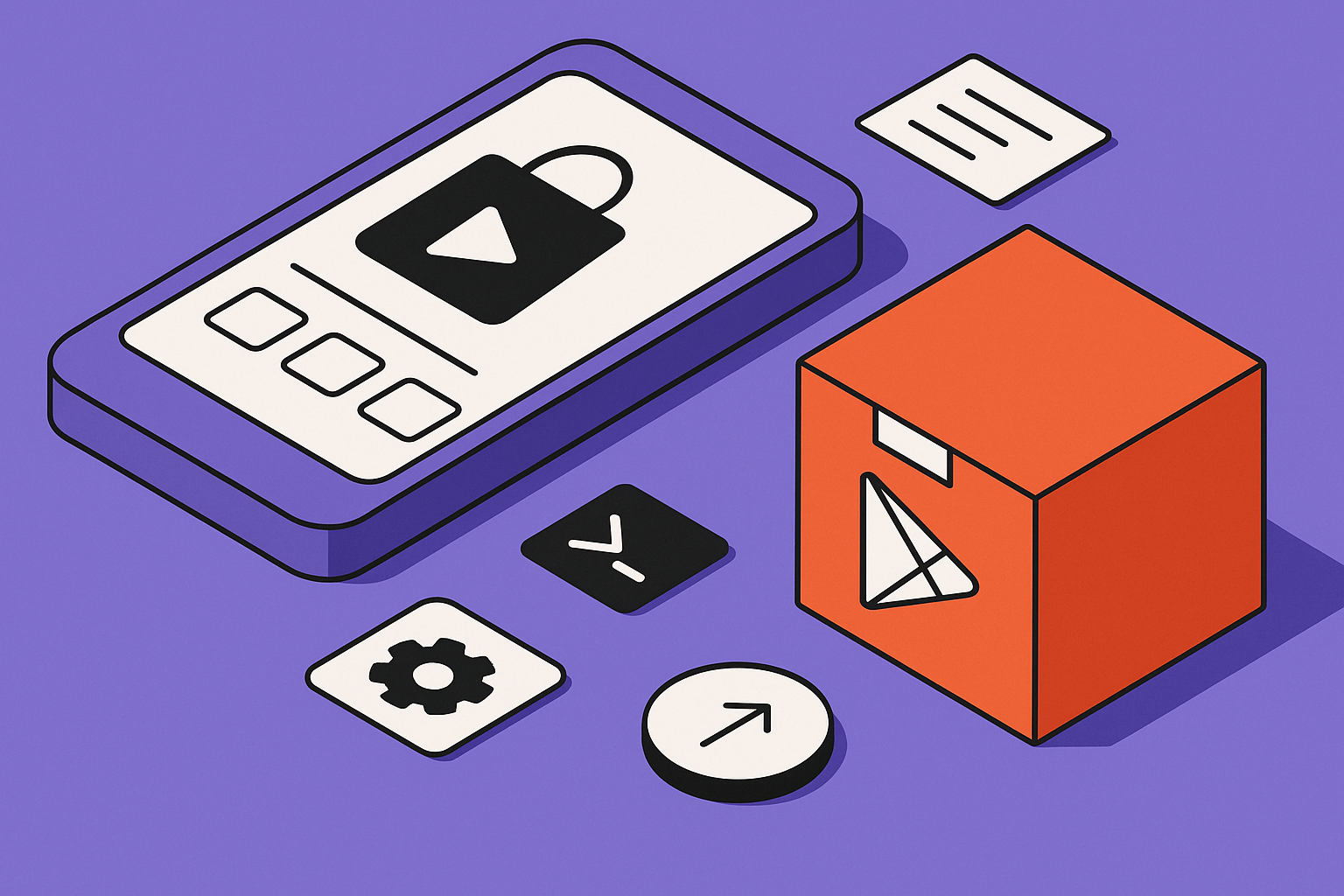
Where Base44 stops
Base44 is strongest when the thing you are building behaves like a web app: screens, data flows, authentication, generated backend behavior, and a fast path from idea to usable product. That is why a founder can get surprisingly far before thinking about app stores at all.
Google Play changes the boundary. The store does not publish an idea, a prompt, or a Base44 workspace. It accepts a packaged Android artifact, usually an Android App Bundle, attached to a developer account, a package name, signing credentials, store metadata, content declarations, permissions, privacy details, testing tracks, and release versions.
Base44 can help generate the files needed for submission. The official material and search results around the topic are clear on that point: Base44 has a path for app store files, including Android output for Google Play. The mistake is assuming that file generation means Base44 owns the whole mobile release lifecycle.
Once you submit to Google Play, you are dealing with Android platform rules and Google Play Console rules. That includes identity, signing, permissions, billing policy, authentication configuration, versioning, and future updates. Some of those decisions are difficult to reverse after your first production release.
That is the practical limitation. Base44 may get you to an AAB. It does not remove the need for someone to understand what the AAB represents, how it is signed, what native permissions it declares, how login callbacks work, and how the next release will be accepted as an update to the same app.
Checklist: your Base44 app is ready to become a Play Store app
- You can generate an Android App Bundle for the exact app you intend to publish.
- The package name is final, unique, and will not need to change after launch.
- The Google Play signing setup is understood before the first production upload.
- The app only requests permissions that match visible user-facing features.
- Google sign-in, payments, and other provider integrations are configured for the Android build, not only the web preview.
- You have a plan for version codes, testing tracks, and future updates.
What Google Play requires
Google Play treats your app as an Android product, even if most of the experience is still powered by a web-style Base44 app. That distinction matters because store review is not limited to whether your app opens. Google also evaluates identity, policy declarations, permissions, payments, content, data handling, and whether the uploaded file is technically consistent with previous releases.
The first requirement is the Android package identity. This is the value that identifies your app on Android. After an app is published under a package name, that identity becomes effectively permanent for that listing. If a later Base44-generated build uses a different package name, Google Play will not treat it as an update to the same app.
The second requirement is signing. Android apps are signed so that the platform and Play Console can verify that updates come from the same source. If the signing relationship changes unexpectedly, you can end up with a build that looks like your app to users but cannot be uploaded as the next version of the existing listing.
The third requirement is versioning. Google Play expects each uploaded release to move forward. A new bundle needs an acceptable version code relative to what is already published or already sitting in a testing track. This is where founders get surprised: the app may build correctly, but Play Console rejects it because the release identity has not advanced correctly.
The fourth requirement is policy fit. If your Base44 app uses payments, subscriptions, marketplace behavior, external account creation, sensitive content, location, camera, files, or identity providers, the store submission is no longer a pure packaging task. It becomes a policy and configuration task.
That is why a Base44 app can feel finished in the browser and still be unfinished for Google Play. The web version proves the product can run. The Play Store version must also prove it can be packaged, identified, reviewed, updated, and governed under Android rules.
First release decisions that are hard to undo
The first release carries more weight than many no-code builders expect. Before publication, changing a package name, cleaning up permissions, regenerating files, or switching accounts may be annoying but manageable. After publication, those same choices can block updates or force you toward a new listing.
Package name is the biggest one. A report of a package name no longer matching the original Base44-generated build is not just a cosmetic issue. Google Play uses that identity to decide whether a bundle belongs to an existing app. If the identity changes, Play Console sees a different app.
Signing is next. Store signing and upload signing are easy to treat as background details when a tool generates a file for you. They are not background details after release. They determine whether your next build can be trusted as an update.
Permissions also deserve attention before launch. A Play Console warning about excessive permissions is not solved by arguing that the builder generated them. If your app requests capabilities that do not match visible features, Google can ask for justification, restrict release, or require changes. The cleaner path is to understand what the Android build declares before you submit.
Payments are another trap. A web app can have Stripe-style flows that make sense in a browser. On Google Play, digital goods, subscriptions, and in-app purchase rules can change what is allowed. A configuration that worked as a web app may create a review or compliance problem inside an Android listing.
Authentication can also split between web and Android. Google sign-in that works in the Base44 preview or browser may fail in the packaged Android app if the Android SHA-256 fingerprint and client configuration are not aligned. The symptom can look like a login loop: the user signs in, returns to the app, and lands back on the login screen.
Treat the first Play Store upload as a production architecture decision, not as the last button in a no-code workflow.
If your app is still experimental, use internal testing or closed testing tracks to catch these issues before production. If the app already has real users, treat every change to identity, signing, auth, payments, and permissions as release engineering work.
If your Base44 app is ready but the Play Store release path is uncertain, do not guess on package name or signing.
AppStuck specializes in rescuing and completing Base44 projects, including the handoff from generated app to production mobile release.
Book a free 30-minute assessmentAfter publication, the work becomes release ownership
Publishing is not the end state. It creates a new operating responsibility: every future release must be accepted by Play Console and must preserve the identity of the app users already installed.
This is where the no-code mental model can break down. In a web app, you change the app and users receive the new behavior the next time they load it. In a Play Store app, some changes require a new Android bundle, a higher version code, a valid signing chain, testing, review, and staged rollout decisions.
That does not make Base44 the wrong tool. It means the product has crossed into a different lifecycle. You still may build product behavior in Base44, but Android distribution has its own rules.
Post-publication problems usually fall into a few buckets. One bucket is update rejection: the new AAB is not considered a valid update because of package name, signing, or versioning. Another is runtime failure: the app installs but login, payments, deep links, or device permissions behave differently than the web version. A third is policy friction: the app works technically, but Play Console objects to permissions, data safety declarations, or payment flows.
The right response depends on which bucket you are in. Regenerating the same build over and over may help if the original file was stale. It will not help if the app identity has changed. Editing store copy may help a policy issue. It will not fix a bad SHA-256 configuration for Google sign-in.
Use the Play Console error and the device behavior as separate signals. A console rejection tells you what Google will not accept. A device symptom tells you what the packaged app is doing after install. They often point to different layers.
Checklist: the problem is after publication, not before it
- Play Console already has a live, internal, closed, or open testing release for this app.
- The new bundle uses the same package name as the first accepted release.
- The version code is higher than every active uploaded version in Play Console.
- The signing setup matches the app listing's expected upload path.
- Any Google sign-in configuration includes the fingerprint used by the Android build.
- Payment flows have been checked against Google Play policy, not only against web behavior.
When Base44 is not enough for the Play Store version
There is a point where the honest answer is not another prompt, another export, or another scan. If your app needs native device behavior, advanced background work, custom Android modules, highly controlled signing pipelines, native payment handling, or deep release automation, a generated Base44 package may not be the right long-term owner of the mobile layer.
That does not mean you must throw away the whole product. It means you need to separate the app into what Base44 should continue owning and what needs a mobile engineering owner. Sometimes Base44 remains the admin app, backend surface, or rapid iteration layer, while the public mobile shell becomes a maintained native or hybrid codebase. Sometimes the simplest path is to stabilize the Base44-generated Android app and keep the scope inside what it can safely support.
The decision should be based on the failure, not on tool loyalty. If the only issue is a missing SHA-256 fingerprint, the fix belongs in configuration. If the issue is a package name mismatch after production release, the options are more constrained. If the issue is Google Play policy around digital payments, the product flow may need to change. If the issue is native behavior Base44 cannot represent, packaging the same web app again will not create that native capability.
Production ownership also includes documentation. Record the package name, signing path, Play Console account, fingerprints, versioning scheme, provider credentials, payment assumptions, and release process. The next person who updates the app should not have to reverse-engineer the first launch from scattered exports and screenshots.
For a founder, the useful question is not simply, can Base44 apps go on Play Store? The useful question is, who owns the Android consequences after the app gets there?
Base44 can be a practical way to build and package a product quickly. Google Play is the distribution system that turns that package into a maintained Android release. The gap between those two is where many stalled launches happen.
If you are deciding whether to keep working inside Base44 or move part of the product into a maintained mobile codebase, the Base44 rescue work AppStuck takes on is usually about clarifying that boundary first. The answer may be a clean Play Console submission. It may be an update repair. It may be a scoped rebuild of only the mobile layer.
Base44 Google Play Store questions
Can a Base44 app be published on Google Play?
Yes, Base44 can generate files intended for app store submission, including Android files for Google Play. But publishing is not just exporting the file. You still need a Google Play developer account, a valid app listing, signing setup, store metadata, policy declarations, testing, and a release process. The Base44 part gets you toward the app artifact. The Google Play part decides whether that artifact is acceptable and maintainable.
Why does the package name matter so much?
The Android package name is the identity of the app. Google Play uses it to connect an uploaded bundle to an existing listing. If your first release used one package name and a later generated build uses another, Play Console will not treat the new file as an update to the same app. Before the first production release, confirm that the package name is final and documented.
Why does Google sign-in work on the web but fail in the Android app?
The web app and packaged Android app can use different identity configuration. For Android, Google sign-in often depends on the SHA-256 fingerprint associated with the build and signing setup. If that fingerprint is missing or attached to the wrong client configuration, the user may complete the browser sign-in step and then return to the app without being logged in. Regenerating the app only helps after the configuration is correct.
Can I use the same Stripe payment flow in the Play Store app?
Maybe, but you should not assume the web payment flow is automatically acceptable in a Google Play app. Google Play has rules for digital goods and in-app purchases. A Base44 web app using Stripe-style configuration may still need policy review or product-flow changes when distributed through Google Play. Physical goods, services, subscriptions, and digital content can be treated differently, so the payment model has to be checked before launch.
When should I move beyond Base44 for Android?
Move beyond a generated Base44 Android package when the mobile layer needs capabilities the builder cannot safely own: custom native modules, complex background behavior, controlled release automation, advanced device integrations, or a signing and update pipeline that must be managed like a conventional mobile product. You may still keep Base44 for parts of the product, but the Android shell needs an owner who understands Play Console and native release constraints.
A Base44 app can reach Google Play, but the store version needs release discipline that a web preview does not demand. The safest path is to make the identity, signing, permissions, payments, and update process explicit before the first production upload.
For more on where Base44 projects tend to need engineering ownership, see AppStuck's Base44 platform page. If your issue is broader than one app store submission, the AI app rescue process is built around finding the smallest safe path from stuck project to shippable product.
If your Base44 app is packaged but Google Play has turned it into a release, signing, or policy problem, pause before uploading another build.
AppStuck specializes in rescuing and completing Base44 projects. We will tell you honestly what your project needs and what it costs before any work starts.
Book a free 30-minute assessmentRelated posts

Need Help with Your AI Project?
If you're dealing with a stuck AI-generated project, we're here to help. Get your free consultation today.
Get Free Consultation